
New startup raises $20 million for solar energy from space
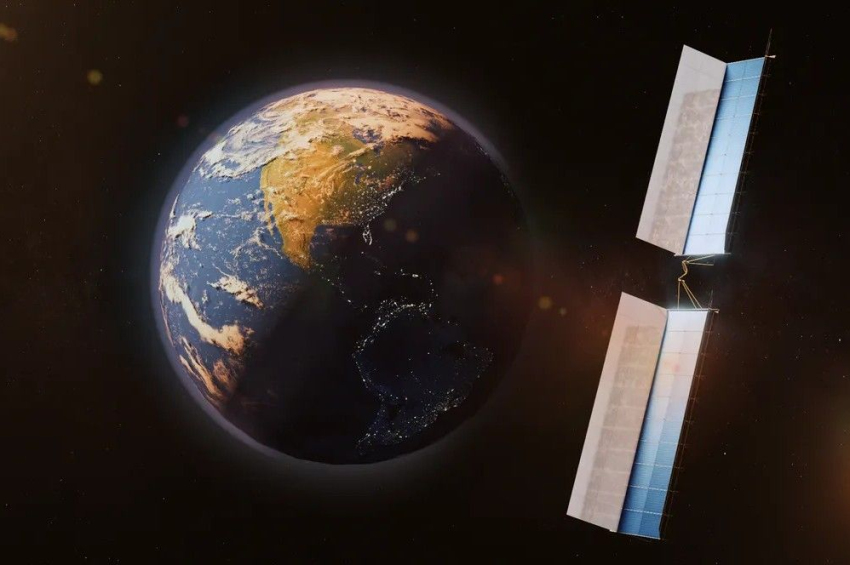
The project is based on “geographic untethering” to project beam anywhere on Earth.
A new U.S. space-energy startup called Overview Energy has proposed a plan to beam solar power from orbit to Earth – and not just to one specific point but to multiple solar farms scattered across the globe.
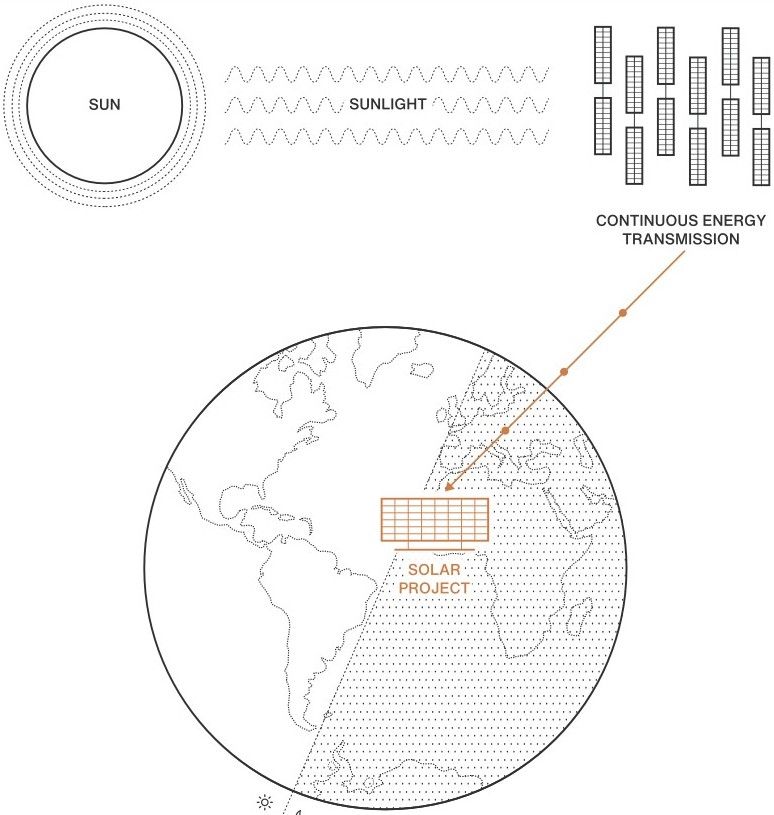
The company, which has already secured $20 million in seed funding and plans a Series A round early next year, wants to build satellites that convert sunlight into laser beams and send that energy directly to the grid. The lasers would target existing utility-scale solar farms, allowing them to generate power even at night.
Because the satellites can redirect energy anywhere on Earth, power could be sent to regions experiencing peak demand. Overnight power could go to California, for example, then shift to Europe as demand rises there. This flexibility is central to making the system economically viable.
More to read:
South Korean researchers get closer to developing solar energy collecting windows
The philosophy behind this arrangement is about moving power-generating operations to space and free land for other purposes.
Currently, Overview Energy is developing highly efficient lasers and custom spacecraft that avoid complex power electronics. The satellites will transmit near-infrared light, which standard solar cells can convert to electricity at roughly 50% efficiency, compared with about 20% for regular sunlight. That would enable solar farms to operate more efficiently at night than during the day.
The company recently successfully transmitted high-power laser energy from a moving aircraft to a ground receiver three miles below. This proves that its core components can work together in motion, an important step before attempting transmission from satellites orbiting 22,000 miles above Earth.
Achieving this will require a massive manufacturing effort. Producing one gigawatt of power would involve launching around 1,000 large satellites, each roughly 500 to 600 feet wide. That is far larger than any satellite currently in orbit.
More to read:
Floating solar panels set to revolutionize energy production landscape
The startup plans to first serve regions where electricity is expensive due to isolation or logistics, such as Alaska, Hawaii, Guam, and Puerto Rico.
Overview Energy’s long-term goal is to supply 10 to 20 percent of global electricity by 2050. The company plans to put its first megawatts on the grid by 2030 and scale to gigawatts in the mid-2030s. The company aims to deliver energy at a cost of 60 to 100 dollars per megawatt-hour by 2035.
It has already booked a SpaceX launch for early 2028.
The idea to harvest sunlight from space was proposed by sci-fi author Isaac Asimov in the 1940s. By the 1970s, Peter Glaser, a space scientist, introduced the idea of using satellites to beam solar energy from space down to Earth. Technologies existing at that time prevented engineers from solving the challenges related to launch costs, construction in space, and efficient energy conversion.
More to read:
Scientists develop microbial fuel cell using soil as power source