
COVID-19 does affect the brains of babies before being born
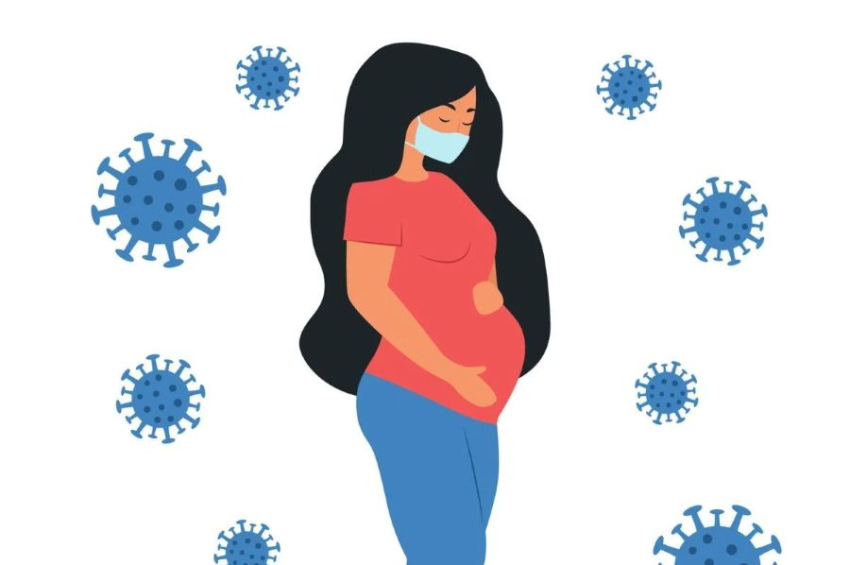
New study says the virus killed some fetuses during pregnancy and altered development of surviving infants later in life.
A growing body of research suggests that exposure to COVID-19 before birth can subtly, but persistently, influence brain development and that exposure to the virus SARS-CoV-2 damaged placentas.
For much of the pandemic, medical guidance around COVID-19 in pregnancy rested on a reassuring premise: newborns almost never tested positive. Because doctors rarely detected the virus in babies at birth, they concluded that transmission from mother to fetus was uncommon.
That conclusion shaped public understanding, but it left out a critical part of the picture. Early studies relied largely on nasal PCR tests, designed to detect active infection at delivery. They offered little insight into what might have happened months earlier in the womb. As the pandemic progressed — especially during the more severe alpha and delta waves — that early confidence began to erode.
As more pregnant patients became seriously ill and stillbirths increased, clinicians started noticing unusual placental damage and unexpected immune responses in newborns.
More to read:
Vaccines have saved 150 million children over the last 50 years
When researchers began using more sensitive methods to study newborns, evidence accumulated that fetal exposure was more common than once believed. Studies increasingly link in-utero exposure to COVID-19 with changes in placental function and, in some children, a higher risk of neurodevelopmental disorders.
While most exposed children develop normally and overall risks remain modest, the findings reinforce the importance of vaccination and long-term monitoring. Of the roughly 3.4 million babies born in the United States during the first four years of the pandemic, more than 160,000 are known to have been exposed to SARS-CoV-2 before birth.
The virus can penetrate the placenta after all
The medical community’s understanding of the after-birth effects of COVID is clearer since then.
The shortcomings of PCR testing became apparent as early as summer 2020. Researchers at NewYork-Presbyterian and Weill Cornell Medicine studied premature infants born to mothers who had Covid-19 during pregnancy. Although nasal swabs were negative, viral material appeared in the babies’ stool — sometimes increasing over time — suggesting in-utero exposure, including in the gastrointestinal tract, which was not routinely tested.
The Cleveland Clinic analyzed placental tissue, amniotic fluid, umbilical cord blood and fetal blood, focusing on samples from the fetal side of the placenta. Low levels of viral genetic material appeared in about a quarter of those samples, indicating that the virus can, in rare cases, cross the placenta.
More to read:
First cancer vaccines based on mRNA technology to be tested in U.K.
Even more striking was the presence of a viral protein. More than 60% of fetal-side samples—especially amniotic fluid — contained ORF8, a SARS-CoV-2 protein that does not replicate but can persist for months after the mother recovers. Foo’s research showed that ORF8 can trigger prolonged inflammation, potentially disrupting placental signaling and early organ development even without active infection.
New evidence
Further evidence came from China. Zhiyun Wei and colleagues at Fudan University’s Obstetrics and Gynecology Hospital conducted the most comprehensive study to date on placental transmission, examining fetal organs following second-trimester pregnancy terminations in Covid-infected mothers. Analyzing more than 500 samples across 32 tissue types, they found that the virus can cross the placenta, but inconsistently and at very low levels—results that closely mirrored Foo’s findings.
According to their study, published in Nature Communications, viral material appeared most often in the digestive system and in the thyroid and thymus, likely through swallowed amniotic fluid. The thyroid is especially significant, as it plays a key role in fetal brain development.
While the researchers didn’t find strong evidence of direct infection in the fetal brain, thyroid involvement points to a possible pathway linking exposure to neurodevelopmental problems, the study says.
Together, these findings shifted the central question. The issue was no longer whether newborns tested positive at birth, but whether prenatal exposure — through low-level infection, lingering viral components or inflammation — might subtly alter development, increasing vulnerability to neurological or psychiatric conditions that could surface years later.
Follow-up studies have sharpened that concern, with clinicians who tracked infants born to infected mothers discovering higher-than-expected rates of motor and language delays, along with elevated screening markers linked to autism spectrum disorder.
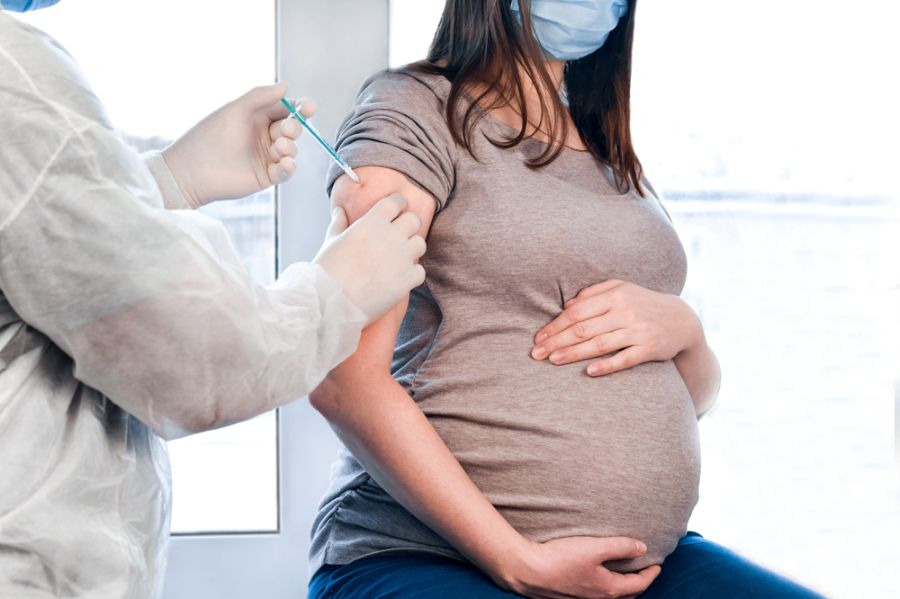
Some women still avoid vaccination over fears for their babies. Credit: AdobeStock
The Massachusetts General Hospital analyzed more than 18,000 births from the pandemic’s first year. By age three, children exposed to Covid-19 in utero had 29% higher odds of receiving a neurodevelopmental diagnosis.
In research published in January 2026, the institution identified subtle but measurable differences in brain structure within weeks of birth among exposed infants. Those changes were later associated with lower cognitive scores and higher anxiety-related behaviors by age two.
The findings mirror patterns seen with other prenatal viral exposures, where maternal immune activation — rather than widespread fetal infection — appears to influence early brain development. None argues that COVID exposure condemns children to poor outcomes. Most will do well. Any increased risk appears modest and may not become evident until much later in life.
Still, the evidence challenges the early assumption that a negative newborn test meant the fetus was unaffected. Many early pregnancy studies were conducted before vaccines were available. Vaccination reduces severe maternal illness, immune activation and placental inflammation — the mechanisms now most closely associated with altered fetal development.
Unfortunately, it was difficult to convince some pregnant women, who feared the vaccine more than the virus, doctors told Bloomberg.
Years after the acute phase of the pandemic has passed, researchers say its quietest effects may still be emerging — in children whose first exposure to SARS-CoV-2 occurred before birth. COVID may feel like the past, but for the generation born during the pandemic, the science suggests the story is still unfolding.