
Scientists claim Mars once had tropical regions

NASA rover found on Mars white clay rocks that usually form after intense rainfall in warm environment.
Scientists studying Mars have found new evidence that the red planet was once far wetter and warmer than previously believed, with conditions that may have included heavy rainfall and long-lasting lakes.
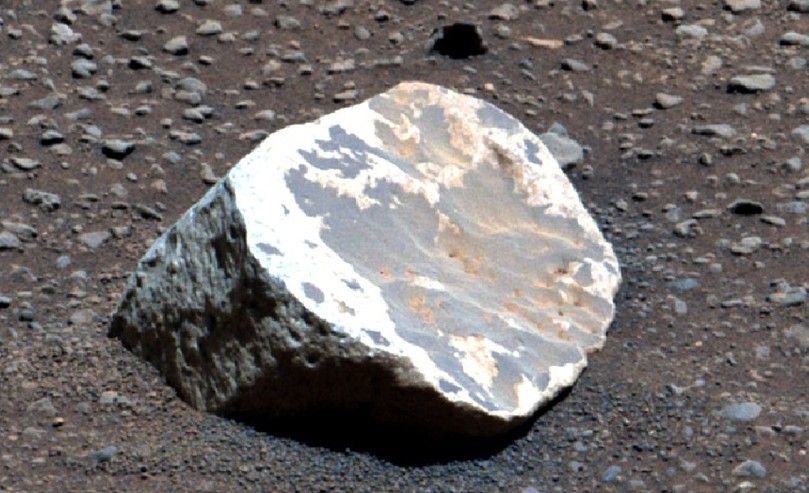
The discovery comes from light-colored rocks spotted by NASA’s Perseverance rover as it explores Jezero crater, an area thought to be the remains of a large ancient lake. The rocks contain kaolinite, a white, aluminum-rich clay that on Earth usually forms only after millions of years of intense rainfall in warm, humid environments.
More to read:
Huge deposits of ice discovered at Mars equator
The findings were published in the journal Communications Earth & Environment by a research team led by Purdue University scientists working with NASA’s Mars mission.
“Elsewhere on Mars, rocks like these are probably some of the most important outcrops we’ve seen from orbit because they are just so hard to form,” Briony Horgan, a planetary scientist at Purdue University and a member of the Perseverance science team said in a university statement.
“You need so much water that we think these could be evidence of an ancient warmer and wetter climate where there was rain falling for millions of years.”
A rare type of clay on a dry planet
Today, Mars is cold, dry, and barren.
Liquid water cannot exist on its surface for long, and its thin atmosphere offers little protection from space. But kaolinite tells a very different story.
On Earth, this type of clay is most commonly found in tropical regions such as rainforests, where constant rainfall slowly washes other minerals out of rocks over very long periods. Researchers say finding it on Mars strongly suggests the planet once had a stable climate that supported flowing water for millions of years.
More to read:
Humans won’t put their feet on Mars any time soon – kidneys are the problem
“So, when you see kaolinite on a place like Mars, where it’s barren, cold and with certainly no liquid water at the surface, it tells us that there was once a lot more water than there is today,” said Adrian Broz, the study’s lead author and a postdoctoral researcher at Purdue University.
Using Perseverance’s onboard instruments, scientists compared the Martian rocks with kaolinite samples from places like Southern California and South Africa and found close similarities.
A mystery scattered across Jezero crater
The kaolinite fragments range from small pebbles to larger boulders and are scattered along the rover’s route through Jezero crater, which once held a lake about twice the size of Lake Tahoe. However, there is no obvious nearby source where the rocks originally formed.
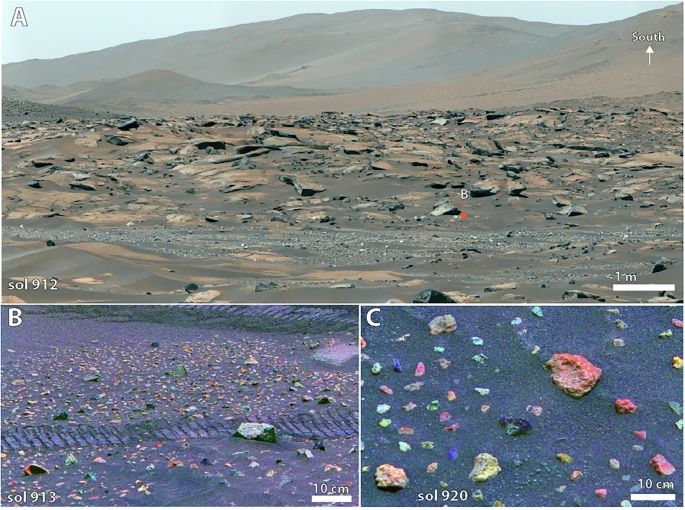
“They’re clearly recording an incredible water event, but where did they come from?” Horgan said. “Maybe they were washed into Jezero’s lake by the river that formed the delta, or maybe they were thrown into Jezero by an impact and they’re just scattered there. We’re not totally sure.”
Satellite images have identified larger kaolinite-rich outcrops elsewhere on Mars, but Perseverance has not yet reached them. For now, these scattered rocks are the best direct evidence scientists have of how such clay formed on the planet.
What it means for life on Mars
The discovery adds weight to the idea that Mars may once have been habitable. Water is essential for all known life, and long-lasting rainfall and lakes would have created stable environments where life could potentially develop.
More to read:
Scientist claims life on Earth might have been imported from Mars
The planet still hosts significant amounts of ice, mainly water ice and dry ice, primarily at its poles.
Beyond the search for life, the rocks may also help scientists understand how Mars changed so dramatically, from a planet with rivers and lakes to the dry world seen today. That transformation, possibly linked to the loss of Mars’ magnetic field and atmosphere, remains one of the biggest unanswered questions in planetary science.
The discovery also reinforces some theories suggesting that life on Earth may have been imported from Mars, billions of years ago.
You may support our small reporting project via BuyMeCoffee. Any amount is welcome.