
Ancient dinosaur footprints discovered in Italy’s Stelvio Alps reveal life 210 million years ago
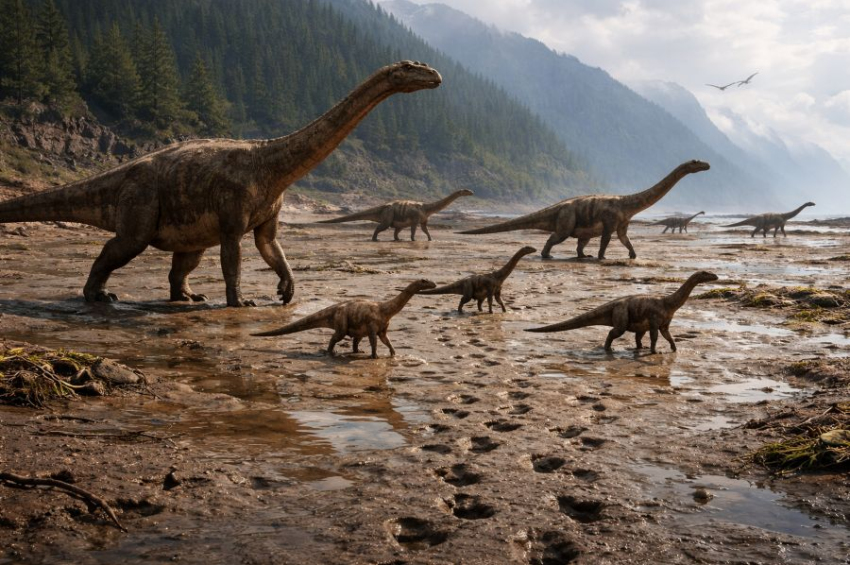
The tracks belong to plant-eating prosauropods, ancestors of giant sauropods.
Thousands of dinosaur footprints dating back around 210 million years have been discovered high in the Italian Alps, offering rare insight into the behavior of some of the earliest large dinosaurs to walk the Earth.
The tracks were found on steep rock faces in the Fraele Valley, within Stelvio National Park in Lombardy, northern Italy, the Milan University said in a statement. The area lies between Livigno and Bormio, close to venues set to host events during the 2026 Milan–Cortina Winter Olympics.
The discovery was made in September when nature photographer Elio Della Ferrera noticed unusual depressions on near-vertical dolomite cliffs while hiking in the park. What initially appeared to be erosion marks were later identified as fossilized footprints preserved in extraordinary density and detail.
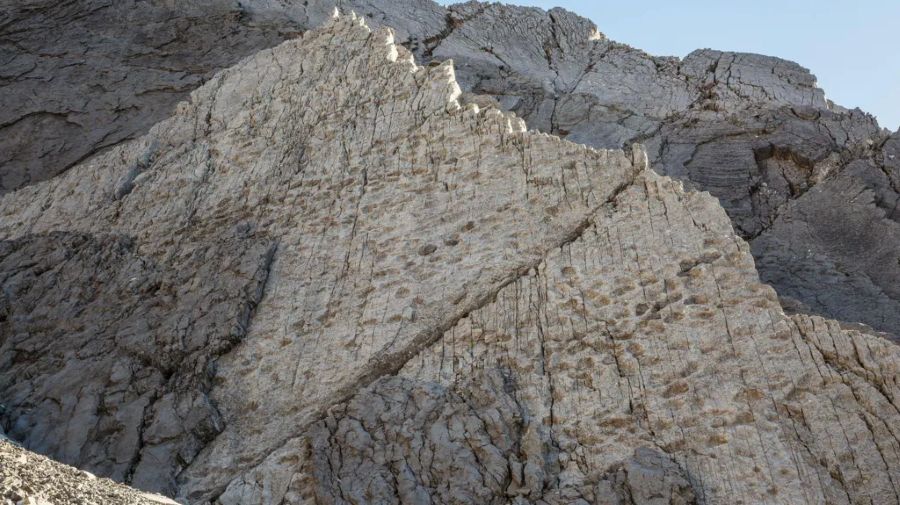
According to researchers, the site extends across nearly five kilometers of rock outcrops and represents the largest known dinosaur tracksite in the Alps, as well as one of the richest Triassic tracksites in the world. These are the first dinosaur footprints ever documented in Lombardy and the only ones found north of the Insubric Line, a major geological boundary in the Alpine region.
Most of the tracks are attributed to prosauropods, long-necked, plant-eating dinosaurs that lived during the Late Triassic period and are considered ancestors of the giant sauropods that dominated later eras. Individual footprints can reach up to 40 centimeters in width and preserve clear impressions of toes and claws.
Researchers from the Natural History Museum of Milan, the University of Milan’s Department of Earth Sciences “Ardito Desio,” and the MUSE Science Museum of Trento are jointly studying the site.
Preliminary analysis suggests the dinosaurs moved across what was once a muddy tidal plain bordering the ancient Tethys Ocean.
More to read:
Fossilized poop unlocks secrets of dinosaurs’ rise to supremacy
Over millions of years, tectonic forces tilted these sediments into the steep rock walls visible today.
The arrangement of the footprints provides rare evidence of dinosaur behavior. Parallel trackways indicate coordinated movement, while clusters and circular patterns suggest social interaction within herds.
In some areas, the density reaches up to six footprints per square meter, pointing to repeated passage by large groups rather than isolated individuals. Smaller tracks interspersed among larger ones indicate that juveniles likely moved alongside adults.
Some impressions also show traces of forelimbs, suggesting moments when animals paused or rested, briefly lowering themselves onto all fours.
Milan’s mayor Giuseppe Sala described the find in a press release as “undoubtedly exceptional for geology and paleontology,” adding: “I am proud to know that the Natural History Museum of Milan has also contributed with great expertise to the recognition of the first dinosaur footprints, and thus to the extraordinary significance of what photographer Della Ferrera captured.”
Tommaso Sacchi, Milan’s councillor for culture, called the discovery “a source of pride not only for the scientific community, but for all of Milan and Lombardy,” highlighting the region’s role as a center of scientific research.
More to read:
[video] Los Angeles museum exhibits the world’s only green-boned dinosaur
Scientists say the site is of particular importance because skeletal fossils from the Triassic period are relatively rare. Trackways, by contrast, provide direct evidence of movement, group structure and interaction, offering a dynamic snapshot of prehistoric life.
Due to the site’s altitude — between 2,400 and 2,800 meters — and its rugged, often snow-covered terrain, the footprints are inaccessible for much of the year. Researchers are using drones and digital mapping techniques to document the tracks in detail, while authorities stress that preservation and safety concerns rule out public access for now.
The Stelvio discovery sheds new light on how early dinosaurs lived, moved and interacted long before they became the dominant animals on land.
You may support our small reporting project via BuyMeCoffee. Any amount is welcome.