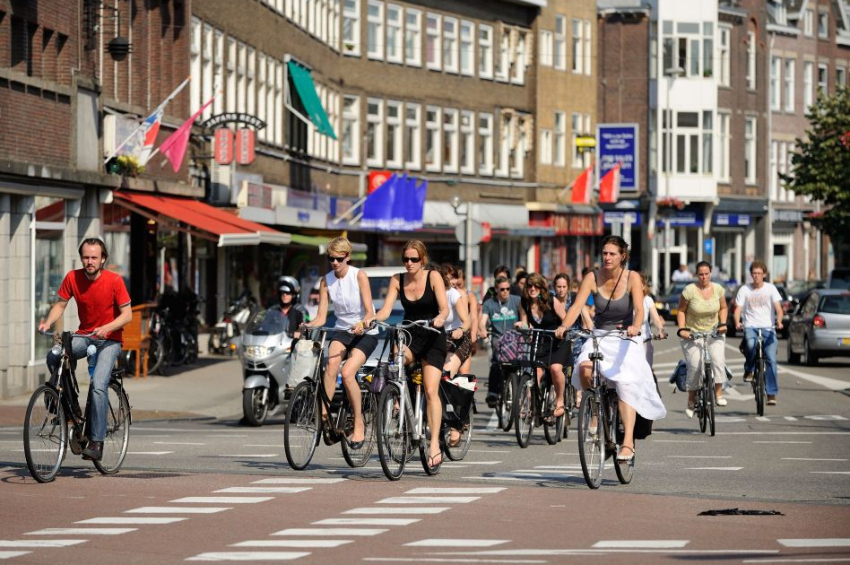
Where do people work hardest in 2025?
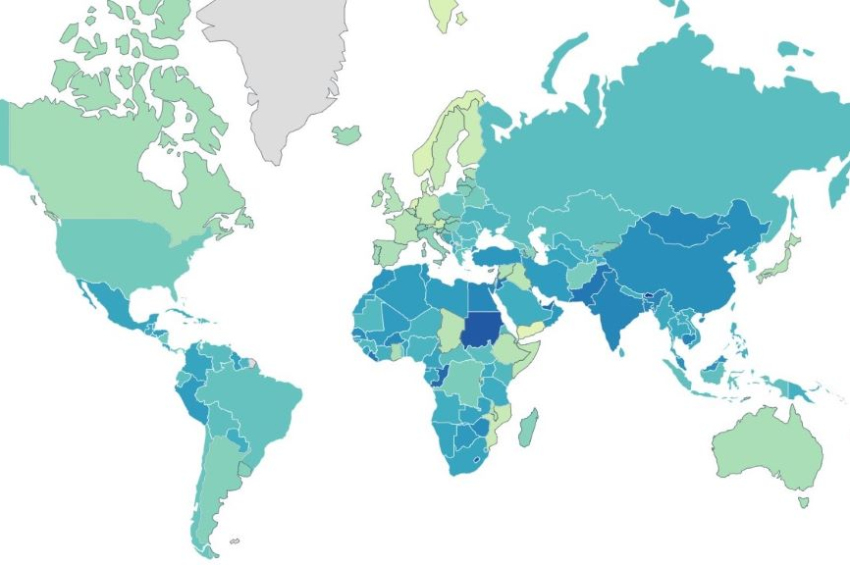
New analysis says Bhutan leads with over 54 hours a week, while Europe’s most developed nations log fewer than 30.
In 2025, the world’s workforce shows a stark divide between nations working long hours out of economic necessity and those where productivity and social protections allow for shorter workweeks. A new report says working harder does not automatically translate into bigger output.
According to data compiled by the World Population Review, Bhutan, an Asian nation with a population of 796,000 people, ranks as the world’s hardest-working country, with employees averaging 54.5 hours per week. This is nearly twice the time spent on the job in the Netherlands, where the average is just 26.8 hours.
Global trends and regional contrasts
Across more than 180 countries surveyed, African countries — including Sudan (50.8 hours) and Lesotho (50.2) — feature some of the highest global averages, underscoring the link between economic vulnerability and longer working days.
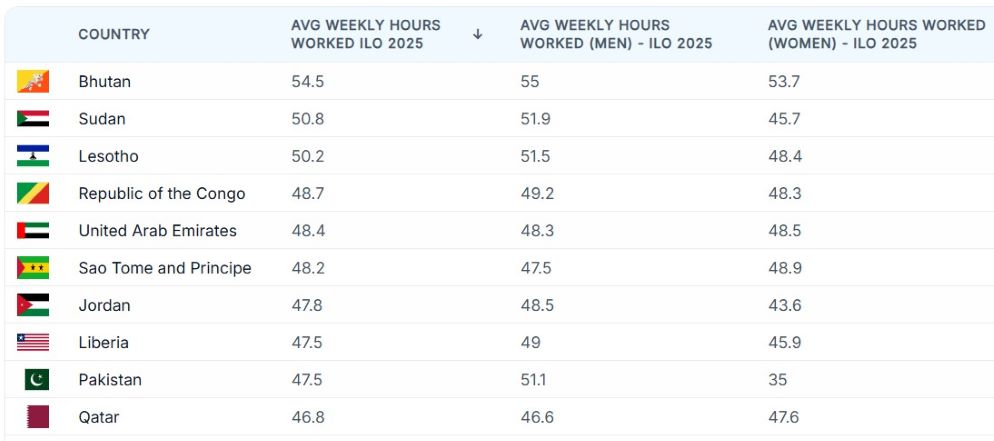
Top ten countries with the longest workweeks. Credit: World Population Review
The global average workweek sits at roughly 38.7 hours, yet the gap between nations highlights deep economic and social contrasts. Many of the countries with the longest workweeks — including the UAE (48.4 hours), Pakistan (47.5), and India (45.8) — are located in South and Southeast Asia.
Extended hours in these regions often reflect labor-intensive industries, limited automation, and minimal welfare systems, which push both employees and self-employed individuals to work longer to sustain income levels.
By contrast, the shortest workweeks are concentrated in Western and Northern Europe, where robust labor laws, high productivity, and strong social support allow for fewer hours without sacrificing output.
The Netherlands (26.8 hours), Norway (27.1), and Denmark (28.8) exemplify how automation, flexible schedules, and emphasis on work-life balance contribute to shorter working time and higher overall well-being.
More to read:
As AI takes over labor market, humans will still be unchallenged as politicians and sex workers
The connection between working hours and happiness
Within the OECD, a group of 38 mostly European high-income nations, shorter workweeks often coincide with higher productivity and life satisfaction. These countries tend to provide generous vacation policies, strict overtime regulations, and parental leave benefits — factors that have helped them consistently rank among the world’s happiest societies, according to the International Labor Organization (ILO).
Meanwhile, low- and middle-income nations often record longer workweeks and fewer worker protections. For many citizens in these economies, economic necessity overrides the pursuit of leisure or rest, with informal labor sectors absorbing a significant share of total work hours.
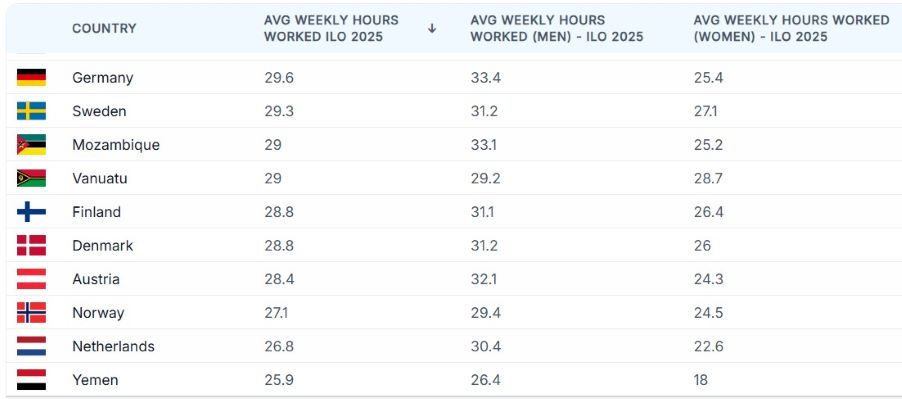
Top ten countries with the shortest workweeks. Credit: World Population Review
The authors note that while long workweeks may signal dedication and economic activity, they do not necessarily translate into higher productivity or well-being. As automation, remote work, and flexible scheduling continue to reshape labor globally, the countries leading in both efficiency and quality of life may soon redefine what it means to be a “hard-working nation.”
The U.S. in the middle ground
The United States, with an average of 36.1 hours per week, sits slightly below the global mean but above other developed nations such as Canada (32.3), the United Kingdom (31.0), and France (30.8).
China, currently the biggest economy in the world, averaged 44.8 hours, and Russia – the largest country – scored 38.2.
More to read:
IMF: Prepare for AI to disrupt nearly 40% of jobs globally
Surprisingly, the shortest workweek is in Yemen, where men log 26.4 hours and women 18. These figures reflect high unemployment and informal labor, poor statitical harvesting, and economic collapse as a result of a decade-long civil war.
Another key takeaway from the WPR report is that everywhere women work less than men (40.7 hours); on global average their workweek is shorter by more than 5 hours. One explanation is that women are statistically more likely to work part-time or take on flexible jobs, often to balance paid work with family or caregiving responsibilities.
Also, women perform about three times more unpaid – thus statistically unreported – work than men.