
New study claims Earth is heading towards mass extinction sooner than expected
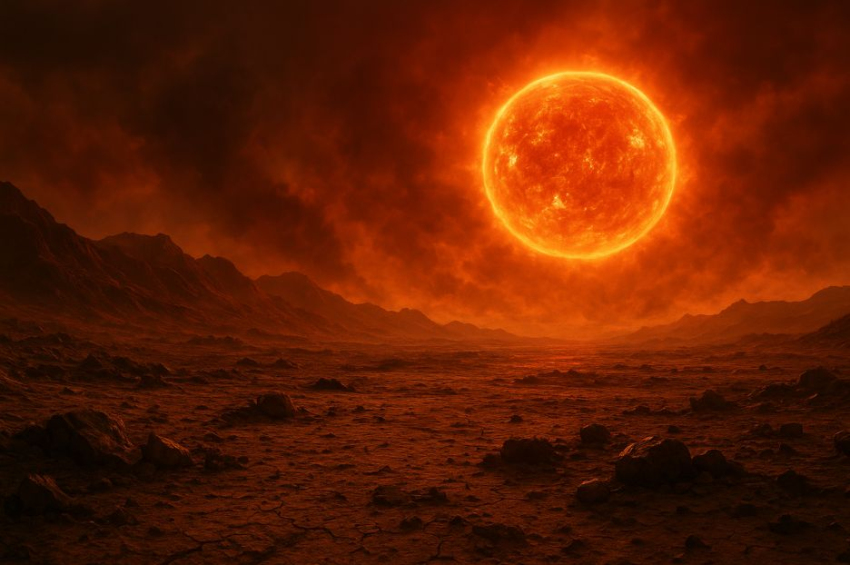
Natural causes will wipe out all life on our planet in 250 million years.
Earth will become uninhabitable sooner than existing models predict, based on observations pointing to the formation of a supercontinent and extreme climate shifts.
A new study published in Nature Geoscience warns that Earth could lose its ability to support life in about 250 million years. Using advanced supercomputer simulations, researchers from the University of Bristol predict a sequence of extreme geological and climatic events—described as a “triple whammy”—that would render the planet inhospitable for mammals.
More to read:
Scientists believe chunks of proto-Earth are buried deep beneath the planet’s crust
According to an international team of scientists from the U.K., Switzerland, and the U.S., Earth’s continents will gradually merge into a final supercontinent known as Pangaea Ultima, driven by ongoing plate tectonics. The collision of continents is expected to fuel massive volcanic activity, releasing large amounts of greenhouse gases into the atmosphere and driving global temperatures to between 40°C and 50°C.
The resulting heat would surpass any warming caused by human activity. The authors note that “coupled with tectonic–geographic variations in atmospheric CO₂ and enhanced continentality effect for supercontinents, Earth could reach a tipping point rendering it uninhabitable to mammalian life.”
More to read:
[video] Scientists officially map out Earth’s 8th continent
As if not enough, following this period of extreme warming, the planet is projected to swing sharply in the opposite direction. The study suggests a cooling phase — similar to past supercontinent cycles — would lead to a second extinction event. The rapid temperature drop could cause ischemic necrosis, a condition in which severe cold restricts blood flow, proving fatal for warm-blooded animals.
Together, the extreme heat and subsequent deep freeze would eliminate any remaining mammalian life, marking the final stage of Earth’s long-term habitability.
Earlier scientific models estimated that Earth would become uninhabitable much later — about 1 to 2.5 billion years from now. The key reason was the Sun’s gradual brightening.
In about 1 billion years Earth would become too hot for complex life such as plants and animals. Oceans may begin evaporating half a billion later, and in 2-2.5 billion years runaway greenhouse would render our planet fully uninhabitable – long before the Sun is expected to become a red giant and pulverize Earth to pieces.