Ex commander-in-chief of Ukraine’s armed forces names bold security guarantees his country needs
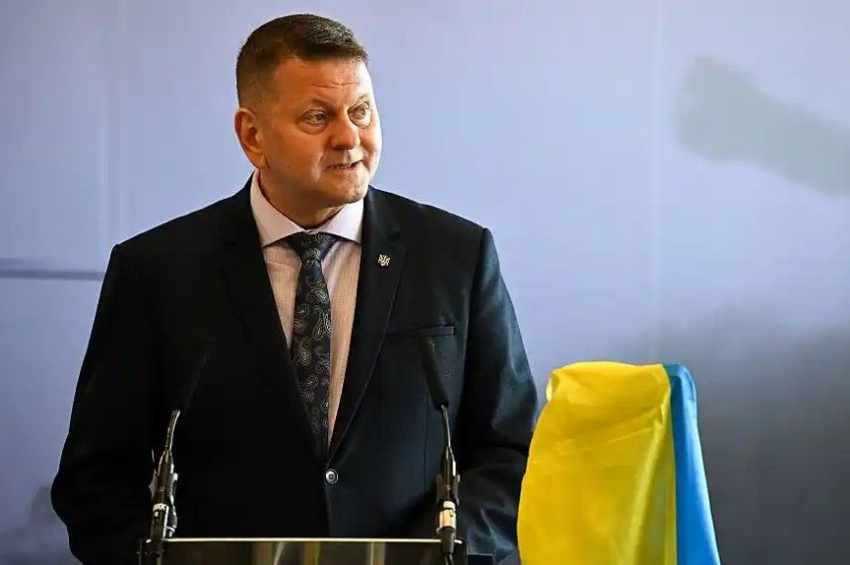
Valery Zaluzhny believes that only NATO membership, deployment of nuclear weapons or presence of an international contingent could help Kyiv deter Russian aggression in the future. For Ukraine, the ultimate victory means the destruction of the Russian empire.
In recent columns for Ukrainian and U.S. media, General Valery Zaluzhny makes a stark observation: without real, enforceable security guarantees, whatever end-of-war agreement Ukraine signs will be, at best, a truce — and almost certainly a prelude to renewed Russian aggression.
In this context, he quoted former U.S. president Benjamin Franklin as saying "Those who give up freedom for temporary security deserve neither freedom nor security."
The general named three theoretical but potent forms such guarantees could take: full accession to NATO, deployment of nuclear weapons on Ukrainian territory, or stationing a large foreign troop contingent in Ukraine – none of which are currently considered for negotiations with Moscow or western allies.
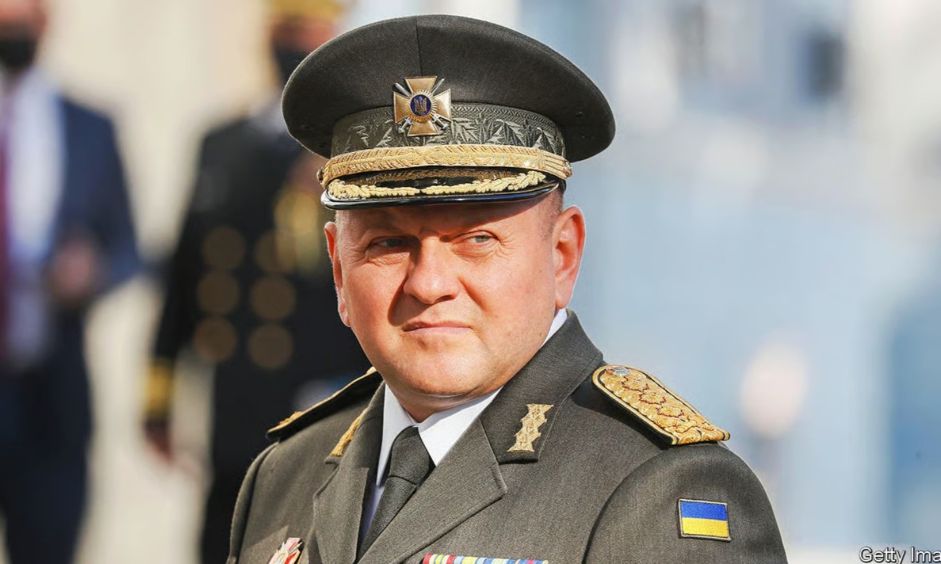
That absence, Zaluzhny warns, means the war will likely continue — not just on the battlefield, but in the political and economic arenas as well. For Ukraine, then, the looming question is not only how to win — but how to secure a lasting peace that does not simply wait for the next Russian onslaught.
Unlikely guarantees
• NATO membership
For Zaluzhny, NATO membership remains the gold-standard guarantee: nothing else would carry the same deterrent weight.
But he recognizes the practical problem: having a war ongoing, millions of displaced persons, contested territory, and unresolved borders makes accession — which under NATO’s rules requires consensus among all members — a remote possibility. In his view, no currently feasible NATO member is doctrinally or technologically ready to offer the kind of protection Ukraine needs, at least in the short run.
More to read:
ExPutin advisor claims U.S. is handling Ukraine to Russia in exchange for alliance against China
• Nuclear deterrence on Ukrainian soil
Zaluzhny also enumerates the deployment of nuclear weapons on Ukrainian territory as a theoretical guarantee.
This suggestion — previously taboo in Kyiv — reflects harsh realism. The failure of the 1994 Budapest Memorandum, under which Ukraine relinquished its Soviet-era nuclear arsenal in exchange for (weak) security assurances, looms large.
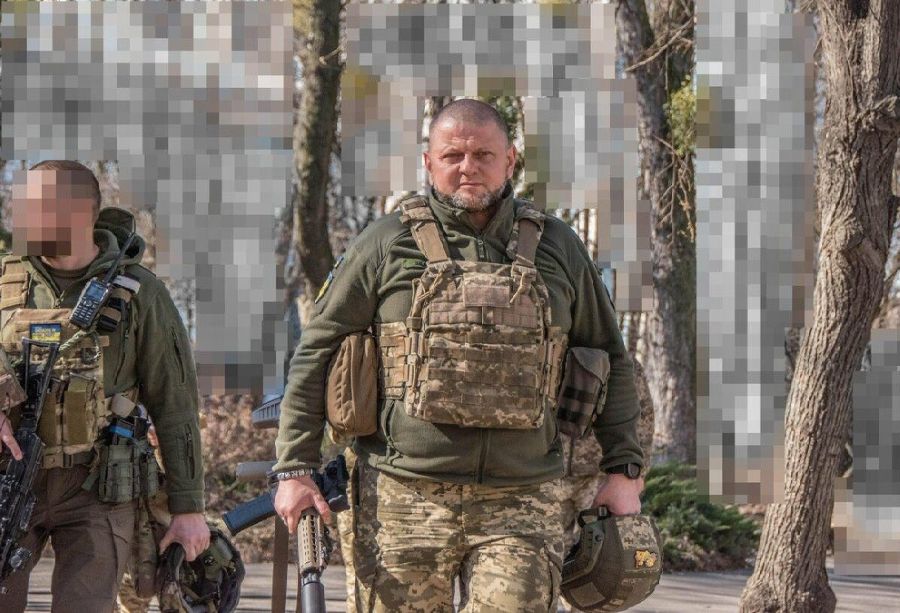
Zaluzhny inspecting Ukrainian troops at the frontline. Credit: The Economist
Still, Zaluzhny admits that nuclear deployment “cannot be considered in principle” today — no ally is willing, or prepared, to effectively guarantee deterrence this way.
This rhetorical inclusion lays bare a bitter truth: nuclear deterrence remains — even in 2025 — an unachievable ideal for Ukraine.
• Foreign Troop Presence (Large Allied Contingent)
Third, a large foreign military contingent made of allied forces and permanently stationed in Ukraine — a kind of de facto buffer — is, in theory, a powerful guarantee. Zaluzhny mentions it among possible security guarantees.
But again, in practice, none of Ukraine’s partners appear willing or capable of deploying such forces in a way that could credibly deter Russia, especially given the scale of Russia’s military and the risk of escalation.
More to read:
Zelenski: Give back Ukraine nuclear weapons or grant it NATO membership
Russia’s political goal — and what victory means for Kyiv
One of the core contributions of Zaluzhnyi’s thinking is a piercing analysis of what the war is really about: not merely territorial skirmishes, but existential politics. He argues that the war should no longer be understood as a limited territorial conflict over Donetsk or Luhansk — Russia’s true target is Ukraine as a sovereign, independent, European-oriented state.
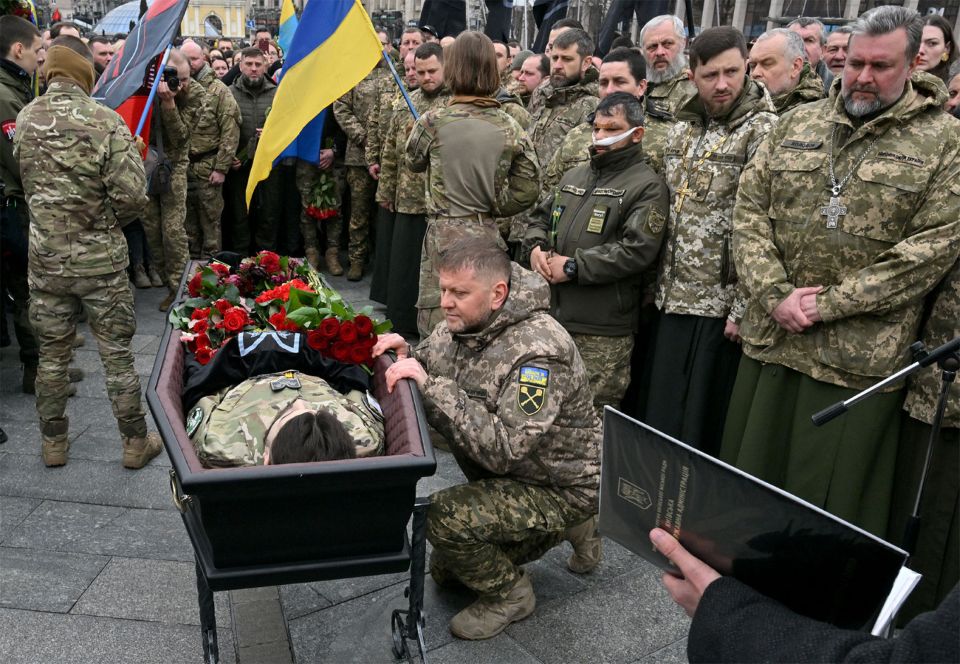
Zaluzhny paying tribute to a Ukrainian soldier fallen on battlefield. Credit: Moscow Times
As he writes: “Russia’s number-one target is Ukraine. It is Ukraine … that should become the gateway to Europe.” Thus, the war aims not just at territory, but at the very dismantling of Ukrainian sovereignty and independence — the re-creation of a Russian imperial sphere of influence.
From this follows his definition of “victory.” In a speech at the New Statesman Politics Live conference in November 2025, Zaluzhnyi declared that for Ukraine, real victory means “the destruction of the Russian empire.”
Anything less — a ceasefire, a frozen front, territorial concessions — is merely an interlude on the path to the next round. As Zaluzhny put it bluntly: if Vladimir Putin is not denied the ability to wage war — at the political, economic, and military levels — then peace will be only a pause.
More to read:
Leaked 100-day Trump peace plan calls for Ukraine territorial loss
Minimum survival program
Recognizing his country’s material asymmetry with Russia — fewer people, less military-industrial capacity — Zaluzhny has repeatedly insisted that Ukraine’s hope lies not in matching Russia in brute force, but in asymmetric advantage: technological innovation, operational adaptability, and sustainable defense.
He argues that only by rapidly mastering new technologies, scaling them, and adapting tactics can Ukraine sustain a “war of attrition” that denies Russia the ability to dictate the terms of peace. This “minimum survival program,” as he calls it, is not glamorous — but in his view, it is the only realistic path under current constraints.
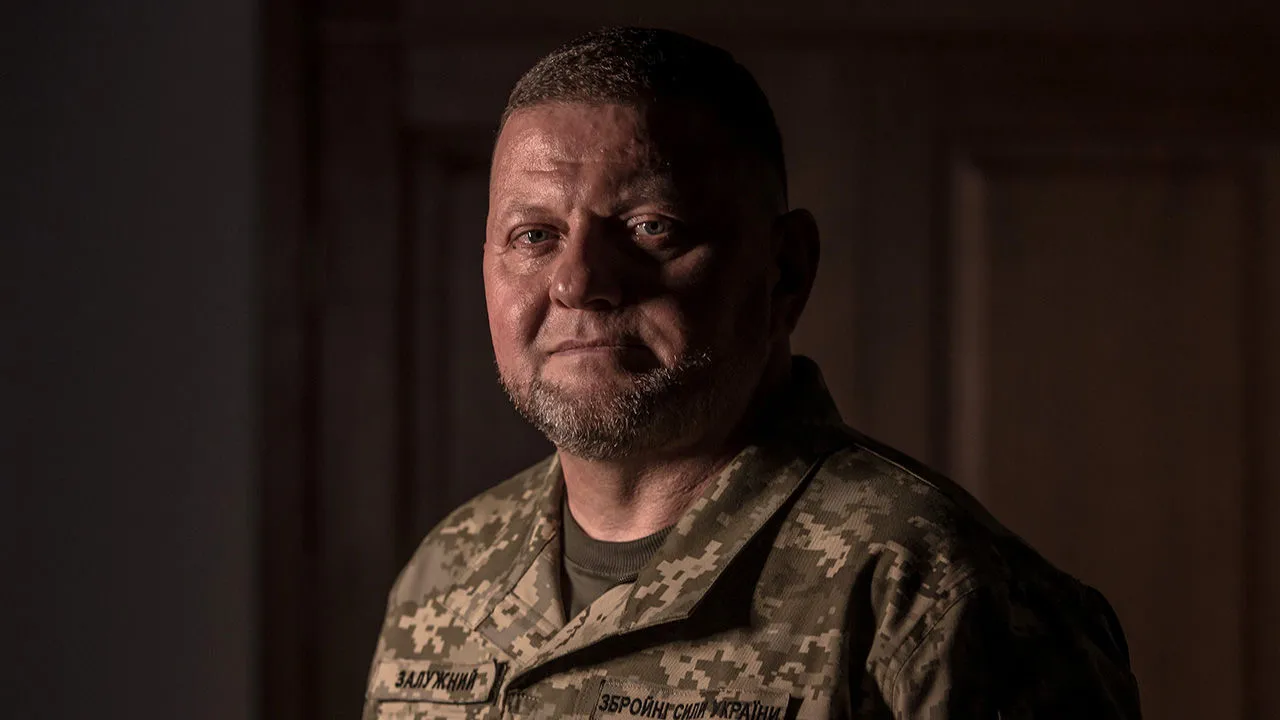
Zaluzhny is the key designer of Ukraine's defense in 2022-2023. Credit: The Economist
The now Ukrainian ambassador to the United Kingdom makes clear that the war will not end with a ceasefire or a peace deal that ignores security. Without credible, long-term guarantees (NATO membership, deterrent weapons, or foreign troops), any deal is, in his words, “just a prolongation of the war.”
If the West does not commit to true deterrence — and if it continues to treat security guarantees as optional bargaining chips rather than foundational conditions — then years of blood, displacement, and destruction may have bought only time, not peace, Zaluzhny noted.
More to read:
Who is helping Ukraine to defend itself from Russia?
Examples in history
General Zaluzhny’s insistence on genuine security guarantees for Ukraine is not theoretical — it is deeply historical.
The last century offers a grim catalogue of what happens when democracies hesitate in the face of expansionist powers. Czechoslovakia’s abandonment in 1938 did not appease Hitler; it emboldened him. The vague and delayed Western commitments to Poland failed to deter Germany’s invasion in 1939.
More to read:
The art of concession: Trump’s foreign policy failures
In Korea, the U.S.’s ambiguous signals about its defense perimeter led directly to North Korea’s assault in 1950. Bosnia’s “safe areas” collapsed because no one was willing to defend them; Rwanda was left to slaughter after peacekeepers begged in vain for reinforcements.
More recently, NATO hesitancy in Georgia and the non-enforcement of the Syrian chemical weapons “red line” eroded Western credibility and paved the way for wider conflicts.
Ukraine has lived this history firsthand: the Budapest Memorandum’s “assurances” did not stop the annexation of Crimea, nor the full-scale invasion eight years later. This is precisely Zaluzhny’s point — security without enforcement is an illusion.
Peace without deterrence is temporary. Treaties without troops, guarantees, or hard commitments crumble at the first test.