
France plans to deploy orbit-based weapons
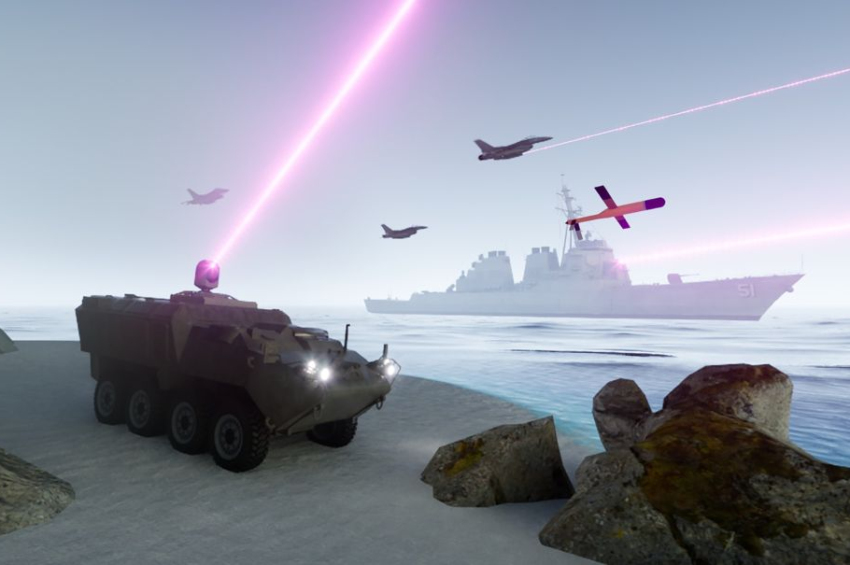
The French join the race for laser weapons to shoot satellites from Earth and ground targets from space.
France is pressing ahead with the development of laser weapons in space that are capable of disabling or damaging satellites, signaling a significant shift in how future conflicts may be fought far beyond Earth’s atmosphere.
Buried in the annexes of France’s proposed 2026 national budget, the plans point to ongoing research into directed-energy systems that could strike satellites either from ground-based platforms or directly from orbit. The disclosure reflects a growing realization in Paris that space—once dominated by surveillance and communications—is rapidly evolving into an active military domain.
Unlike conventional anti-satellite (ASAT) weapons that rely on kinetic interceptors or explosive charges and risk creating long-lived orbital debris, laser systems offer a more controlled alternative. Such weapons can blind sensors, overheat key components, or disrupt communications without shattering satellites into dangerous fragments.
More to read:
[video] Defense startup deploys “laser” shield that neutralizes drones in seconds
For France, a spacefaring nation, the plan is both strategic and practical, given that the United States is decoupling from Europe and pushing for an America First security doctrine.
While the full scope of the program is classified, budget entries confirm that feasibility studies are already underway. These include assessments of ground-based lasers capable of engaging targets in orbit, as well as early research into space-to-space laser systems.
France’s move builds on earlier steps toward the militarization of space. In 2019, Paris established a dedicated space command within the Ministry of Armed Forces, formally acknowledging that future conflicts may unfold beyond land, sea, and air.
Laser weapons would represent a logical extension of that strategy, particularly as France watches the activities of near-peer rivals such as Russia and China – and more recently the U.S. under the presidency of Donald Trump.
More to read:
[video] UK to deploy laser cannon for Royal Navy by 2027
The three major powers are believed to be quietly working on developing satellites capable of co-orbital interference and other aggressive maneuvers. Russia and China held conflict simulations on orbit during the past three years, according to U.S. intelligence, practicing objects’ collision with inactive satellites.
One such drill by Russia nearly destroyed the International Space Station (ISS) in 2024 as some debris from impact headed towards the ISS’ trajectory.
Although the war in Ukraine has slowed Russia’s military research and development of new weaponry, the U.S., China, the United Kingdom, and Israel have advanced in creating laser-based air-defense systems.
With France joining the suit, the space arms race is gaining new momentum and raises difficult strategic and legal questions, which risks cancelling the patchwork of international norms that government human interference in space. They include the 1967 Outer Space Treaty, which bans weapons of mass destruction in orbit but remains largely silent on non-nuclear systems such as lasers.
More to read:
China claims to be close to deploy beam weapon