
The Dutch were the tallest people on Earth in 2025

The Top 10 was dominated by Nordic and East European countries.
If height were a global league table, the Netherlands would still be holding the trophy. The Dutch are the tallest people on Earth, by every major international measurement. Dutch men average about 183.8 cm, while Dutch women average 170.4 cm, a statistical fact that has remained remarkably stable during the past decade and is documented in global height comparisons compiled by Calqora, a height-measurement and comparison platform that aggregates international data across countries and sexes.
They were the tallest a decade ago too, according to a study published by the London School of Hygiene & Tropical Medicine in 2015.
This is not merely a curiosity of anthropology. Human height is a biological archive: it reflects nutrition, health systems, inequality, reproductive patterns, and long-term economic development. When we look at who is tallest—and who is shortest—we are also looking at how societies organize food, healthcare, and opportunity.
A Northern European pattern
The Netherlands does not stand alone at the top. The top ten tallest nations in the world are dominated by Europe, particularly Northern, Central, and Balkan states. According to Calqora’s latest country-level averages, the list includes:
1. Netherlands
2. Montenegro
3. Bosnia and Herzegovina
4. Iceland
5. Denmark
6. Czech Republic
7. Latvia
8. Slovakia
9. Slovenia
10. Ukraine
The clustering is striking. Most of these countries share long histories of dairy consumption, relatively strong public health systems, and—in the post-war period—sustained improvements in childhood nutrition.
Several Balkan populations, in particular, display extraordinary male height despite more modest economic performance, suggesting that genetics and historical diet also play an important role.
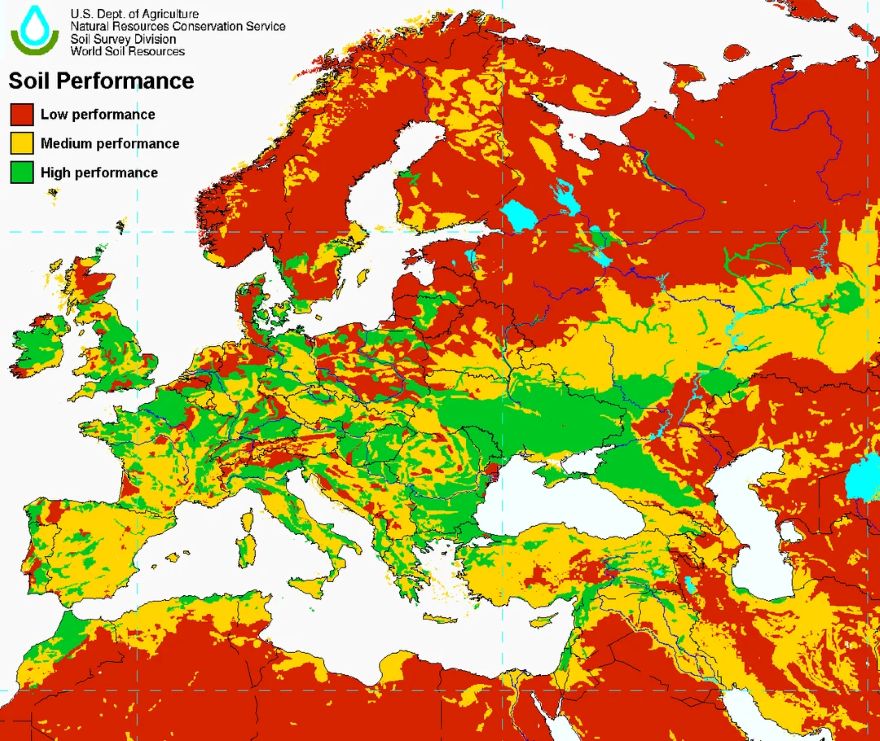
Yet, if we look at the European map of soil fertility, we’ll see that these are the very countries where soil quality is excellent. Such soil is great for grazing, ensuring that cows provide quality dairies.
The Dutch were not always tall
The Dutch, however, have combined favorable genetics with unusually optimal environmental conditions for growth.
One of the most important points often overlooked in casual discussions about Dutch height is that it is a recent phenomenon. In the early 18th century, the average Dutch man stood roughly 163 cm, shorter than many Europeans of the time. Over the past 150–200 years, the Dutch population gained close to 20 centimeters in average height—one of the fastest secular increases ever recorded.
Such a rapid change cannot be explained by genetics alone. Genes evolve slowly. Environments change fast.
Nutrition, health, and active lifestyle
The most visible explanation lies in nutrition. The Netherlands is one of the world’s highest consumers of dairy products. From early childhood, Dutch diets are rich in milk, cheese, and yogurt—foods dense in protein, calcium, and growth-supporting nutrients. While dairy alone does not “cause” height, it strongly supports skeletal development when combined with adequate overall caloric intake.
More to read:
Life expectancy is highest in wealthy European countries and lowest in sub-Saharan Africa
Equally important is healthcare. The Netherlands has long maintained near-universal access to maternal care, childhood vaccinations, growth monitoring, and nutritional guidance. Childhood disease, which historically stunted growth across much of the world, became relatively rare early on. Children were not only fed better; they were sick less often.
Economic stability reinforced these advantages. Height correlates strongly with childhood living conditions, and Dutch children grew up, generation after generation, with reliable access to food, housing, sanitation, and low levels of chronic stress—factors known to influence physical development.
What is the role of natural selection?
Nutrition and healthcare explain much, but not everything. The 2015 landmark study examined whether natural selection itself may have reinforced tall stature in the Netherlands.
More to read:
Billions of people on Earth may be undercounted, Finnish university researchers claim
Using data from the LifeLines cohort—nearly 95,000 individuals—the researchers found that taller Dutch men consistently had more children than shorter men, while women of average to above-average height experienced higher child survival rates.
In evolutionary terms, this matters. Traits associated with greater reproductive success tend to become more common over time.
The study concluded that natural selection, acting alongside excellent environmental conditions, likely contributed to the Dutch height advantage, even in a modern, low-mortality society. Height was not just tolerated; it was subtly rewarded.