Meta took billions for promotion of fraudulent ads from China, documents show
New investigation says Mark Zuckerberg personally ordered the disbandment of the anti-adscam team.
Meta Platforms Inc. knowingly tolerated large volumes of fraudulent and banned advertising originating from Chinese partners to protect billions of dollars in revenue, according to internal company documents reviewed by Reuters.
The records, which were analyzed in a new investigation, show executives repeatedly curbed enforcement after determining that tougher action would significantly damage Meta’s advertising business.
Between 2022 and 2024, Meta’s advertising revenue from China more than doubled, rising from $7.4 billion to $18.4 billion and accounting for about 11% of global revenue. Internal estimates found nearly one-fifth of that income—more than $3 billion a year—came from ads promoting scams, illegal gambling, pornography and other prohibited content.
Meta loves Chinese scammers
Although Facebook, Instagram and WhatsApp are blocked inside China, Beijing allows Chinese companies to advertise to foreign users. That loophole has made China Meta’s largest source of fraudulent advertising globally, internal documents show.
“Nowhere are the tradeoffs Meta makes between protecting its users and protecting its revenue clearer than in China,” one document states, calling the country the company’s top “Scam Exporting Nation.”
Meta staff estimated that Chinese advertisers were responsible for roughly a quarter of all scam and banned-product ads worldwide. Victims ranged from shoppers in Taiwan buying fake health products to investors in the United States and Canada who lost savings to fraudulent schemes.
More to read:
Meta has become the world’s largest advertiser of narcotics
In 2024, Meta created a China-focused anti-fraud team that cut the share of problematic Chinese ads from about 19% of China-related revenue to roughly 9% in the second half of 2024. The effort was short-lived.
After what internal documents describe as an “Integrity Strategy pivot” and follow-up involving CEO Mark Zuckerberg, the China enforcement team was “asked to pause” its work. He later quietly disbanded the team, lifted a freeze on onboarding new Chinese ad agencies and instructed shelving additional anti-scam measures that internal tests had found effective.
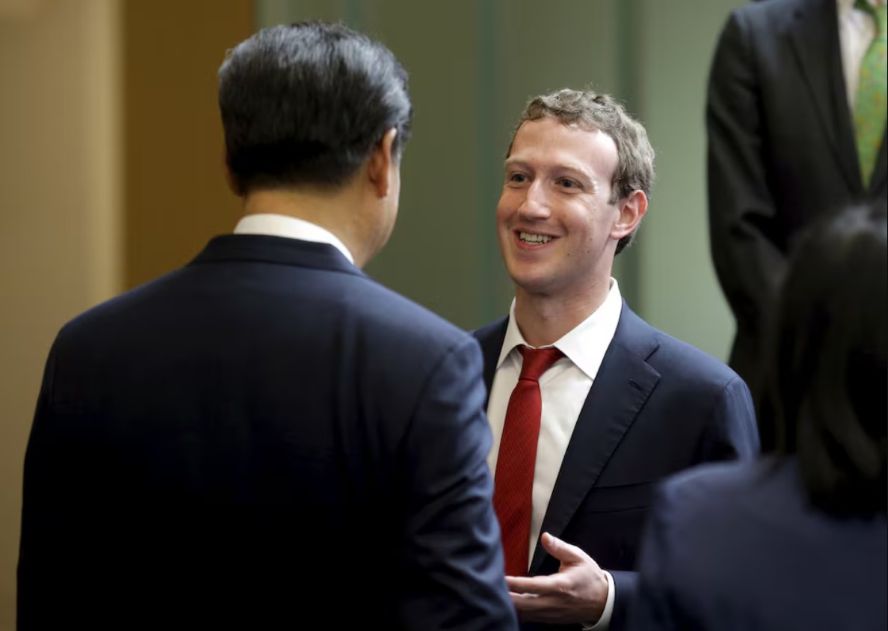
Mark Zuckerberg lobbying for Meta access in the Chinese market at a meeting with Chinese President Xi Jinping in 2015.
Credit: Reuters
Within months, fraud rebounded. By mid-2025, banned ads again accounted for about 16% of Meta’s China-linked revenue.
Internal documents show revenue concerns repeatedly overrode safety considerations. In February 2025, managers decided Meta would permanently tolerate higher misconduct levels from Chinese advertisers rather than seek parity with global standards, aiming only to “maintain the % of global harm” from China.
Meta tolerates exploits
In May 2025, staff identified 800 Chinese-linked ad accounts that generated $28 million in rule-breaking ads in a single month. More than 75% of the spending came from accounts with special partner protections. When asked whether to punish the major partners controlling the accounts, one employee replied no, because “the revenue impact is too high.”
More to read:
Revolut points to Meta platforms as “hotbed” for scams
The documents show the problem is rooted in Meta’s Chinese advertising structure. The company sells ads through 11 major Chinese “top tier” resellers, which recruit layers of smaller agencies and thousands of advertisers who rarely interact directly with Meta.
A report Meta commissioned from London-based consultancy Propellerfish found the system opaque and easily exploited. Advertisers need minimal verification, fake accounts are widespread, and Chinese firms sell tools to disguise identities and banned content, often using artificial intelligence. An industry of “ad optimization specialists” exploits enforcement gaps, while Chinese authorities generally do not intervene because the ads target foreign users.
Compared with rivals, Meta was seen as more permissive. Propellerfish found enforcement was “inconsistent,” while TikTok was “stricter” and Google required more thorough identity checks.
More to read:
Meta faces scrutiny over alleged censorship tools and data sharing with China
Meta pays its top Chinese resellers about a 10% commission and grants them special enforcement privileges. Under a “whitelisting” system, ads flagged by automated systems remain live pending human review, which can take days or never occur.
Unfortunately, the added time for secondary review is adequate for scammers to accomplish their objectives by gaining massive impressions,” one internal document states.
Some partners openly advertise these advantages. “80% lower chance of suspension than other regular agents, promises the website of Yinolink, one of Meta’s official partners.
Testing Facebook for fraud
Reuters testing showed how easily the system could be abused. A U.S.-based reporter purchased ad accounts linked to Meta’s Chinese partners for less than $30, paid via cryptocurrency, and openly stated an intent to run banned ads.
Using accounts tied to partners including GatherOne and Cheetah Mobile, Reuters placed ads promising unrealistic investment returns. The ads ran without interruption and attracted responses from dozens of users.
More to read:
Irish regulator fines Meta €251 million for security breach that effected millions of users globally
Internal warnings persisted as revenue surged. In 2023, Meta stopped verifying new Chinese ad agencies due to “high harm,” but lifted the moratorium in 2024 to “unlock” revenue. Half of the $240 million in annualized ad spend from newly verified resellers later violated Meta’s rules.
Meta-backed scams on the rise
One advertiser, Beijing Tengze Technology Co Ltd, had more than half its ads flagged for deception yet ranked among Meta’s top 200 advertisers worldwide. Rather than cutting ties, Meta charged higher rates as a “penalty.” Meta said it later severed the relationship; the company has since shut down.
The real-world impact has been severe. In March 2025, U.S. prosecutors said the FBI seized $214 million tied to a Chinese stock scam promoted via Facebook and Instagram ads. Victims were routed into WhatsApp groups run by “individuals in China posing as U.S.-based investment advisors,” prosecutors said.
Reuters previously reported that about 10% of Meta’s 2024 revenue—roughly $16 billion—was projected to come from scam, gambling and other banned ads, prompting U.S. senators to urge regulators to investigate.
More to read:
Avast warns of surging financial scams on Facebook and Instagram